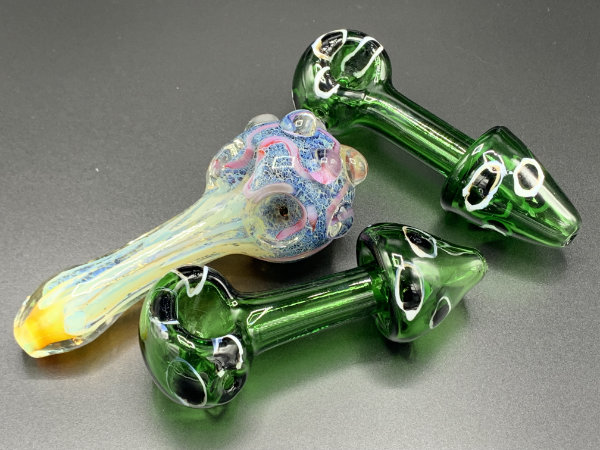

Wholesale glass pipe market overview
The wholesale glass pipe market has shifted decisively toward borosilicate quality as retailers seek durable, heat-resistant products that justify higher retail margins. Major distributors now stock thousands of SKUs, ranging from simple single-chamber pipes to complex percolators, allowing buyers to curate inventory that matches specific customer preferences.
Leading suppliers like SPS Wholesale and Hara Brands have standardized minimum order quantities (MOQs) around $100, lowering the barrier to entry for small retailers while maintaining efficient shipping logistics from hubs like California. This volume allows shops to test new designs without committing to large, risky stockpiles.
The current landscape favors suppliers who can offer rapid fulfillment alongside a broad selection of borosilicate options. Retailers are increasingly prioritizing product longevity and thermal shock resistance, driving demand away from cheaper, less durable alternatives. Understanding these supply chain dynamics is essential for sourcing competitive glass pipe inventory.
Supplier tiers and MOQs
Wholesale glass pipe sourcing hinges on matching your order volume to the right supplier tier. Retailers generally choose between direct manufacturers, who offer the deepest margins but require high minimums, and large distributors who provide lower MOQs and faster shipping at a slightly higher cost per unit. Understanding these structures prevents cash flow bottlenecks and ensures you stock the right mix of high-volume sellers and niche pieces.
Direct Manufacturers
Direct manufacturers produce glass pipes in-house, often in bulk quantities. This model offers the lowest wholesale price per unit, which is essential for maintaining healthy margins on standard hand pipes and bongs. However, the barrier to entry is high. Manufacturers typically enforce strict Minimum Order Quantities (MOQs), often requiring orders of 500 to 1,000 units per style. They also usually require longer lead times for production and shipping. This tier suits established retailers with consistent sales velocity and the storage capacity to hold large inventory.
Large Distributors
Large distributors act as intermediaries, buying bulk from manufacturers and breaking it down for smaller retailers. Their primary advantage is flexibility. They often accept much lower MOQs, sometimes as low as $50 to $100, allowing new or small shops to test products without significant capital risk. While their unit prices are higher than manufacturer rates, they compensate with faster shipping, curated product ranges, and consolidated logistics. This tier is ideal for retailers prioritizing speed and variety over absolute lowest cost.
Comparison Table
The following table compares typical supplier profiles to help you evaluate partners against your operational needs.
| Supplier Type | Typical MOQ | Unit Price | Shipping Speed | Best For |
|---|---|---|---|---|
| Direct Manufacturer | 500-1000 units | Lowest | Slow (2-4 weeks) | High-volume retailers |
| Large Distributor | $50-$100 | Moderate | Fast (2-5 days) | Small shops & testing |
| Dropshipper | 1 unit | Highest | Variable | No inventory risk |
How wholesale glass pipes are priced
Wholesale glass pipes follow a tiered pricing structure that rewards volume. Most distributors price by the unit for small orders, switch to case pricing for standard bulk, and offer per-box rates for high-volume retail partners. Understanding these tiers helps retailers forecast inventory costs and calculate realistic margins before committing to stock.
Unit and case pricing tiers
For small smoke shops or new dispensaries, distributors often quote per-unit prices that include a base manufacturing cost plus a small handling fee. As order volume increases, the per-unit cost drops. A standard case might contain 12 to 24 pieces, depending on the pipe size and style. Bulk buyers typically negotiate a flat case rate that simplifies accounting and reduces per-item shipping overhead.
Box pricing for high volume
High-volume retailers often purchase in display boxes or master cartons. These units are designed for direct shelf placement, meaning the retailer saves on labor and display setup. The price per unit in a box is usually the lowest available, but it requires a higher minimum order quantity (MOQ). This model works best for established stores with consistent foot traffic and proven sales velocity for glass accessories.
Typical retail markups
Retailers generally apply a 2.5x to 3x markup on wholesale glass pipes to cover overhead, shrinkage, and profit. For example, a pipe costing $5 wholesale might retail between $12 and $15. This margin accounts for the fragility of glass products and the need to maintain a diverse inventory of shapes and sizes to meet customer preferences.
Vetting suppliers for quality
Wholesale glass pipes are fragile, expensive to replace, and highly visible to your customers. A single batch of cracked bowls or poorly fused stems can damage your store’s reputation faster than a pricing error. When evaluating wholesale glass pipe suppliers, you must look beyond the catalog photos and audit their production standards, material integrity, and logistical reliability.
1. Verify Glass Type and Thickness
Not all "glass" is created equal. For wholesale glass pipes, borosilicate glass is the industry standard for durability and heat resistance. It withstands thermal shock far better than soda-lime glass, reducing the risk of spontaneous cracking during use or shipping. Ask suppliers for material specifications. If they cannot confirm borosilicate composition, treat it as a red flag. Thicker walls generally indicate better heat distribution and longevity, which directly impacts customer satisfaction.
2. Audit Breakage and Return Rates
Your profit margin on glass is often eroded by breakage. Before signing a wholesale contract, request recent data on their breakage rates during transit and their return policy for defective items. Reputable suppliers like Roetell, who specialize in wholesale glass smoking pipes, typically have robust packaging protocols. If a supplier offers prices significantly below market average, ask how they mitigate breakage. Often, lower prices come with thinner glass or inadequate padding, leading to higher long-term costs for you.
3. Test Shipping Reliability and Packaging
Glass pipes are not shipped like t-shirts. Evaluate how suppliers package their wholesale glass pipe orders. Do they use double-walled boxes, bubble wrap, or custom inserts? Ask for their average shipping time to your region and their insurance policy for lost or damaged goods. Consistent, on-time delivery is critical for maintaining stock levels. If a supplier frequently misses deadlines or uses flimsy packaging, the savings on unit cost will be lost in restocking fees and customer complaints.

Supplier Quality Checklist
Use this checklist to standardize your vetting process for any new wholesale glass pipe vendor:
-
Material Confirmation: Supplier explicitly states "borosilicate glass" in specs.
-
Packaging Protocol: Uses rigid boxes with internal cushioning for glass items.
-
Breakage Guarantee: Clear policy for replacing cracked/defective items upon arrival.
-
Sample Order: You have physically tested a sample batch for fit and finish.
-
Shipping Speed: Average transit time meets your inventory turnover needs.
-
MOQ Clarity: Minimum Order Quantities are transparent and scalable.
Shipping logistics and costs
Glass pipes are high-volume, low-margin items where shipping costs can easily erase thin wholesale margins. Because glass is fragile, retailers must balance protective packaging with weight and dimensional pricing. A single cracked piece in a bulk shipment is a total loss, making packaging standards non-negotiable for maintaining healthy gross margins.
Most major carriers restrict or prohibit shipping glass products due to liability risks. SPS Wholesale, for example, ships from California with a $100 minimum order, while GW Products utilizes a Dallas warehouse for 1–2 day shipping cycles. These regional hubs help reduce transit times but require retailers to align inventory orders with carrier cut-off times to avoid delays.
Packaging typically involves double-walled corrugated boxes with ample void fill. While this protects the product, it increases dimensional weight, which carriers charge for rather than actual weight. Retailers should negotiate flat-rate shipping tiers with suppliers or factor these logistics costs into their retail price point to ensure profitability.
No comments yet. Be the first to share your thoughts!